№03 — Korean instant noodles
Yoon Nam-no's spicy Chapagetti upgrade
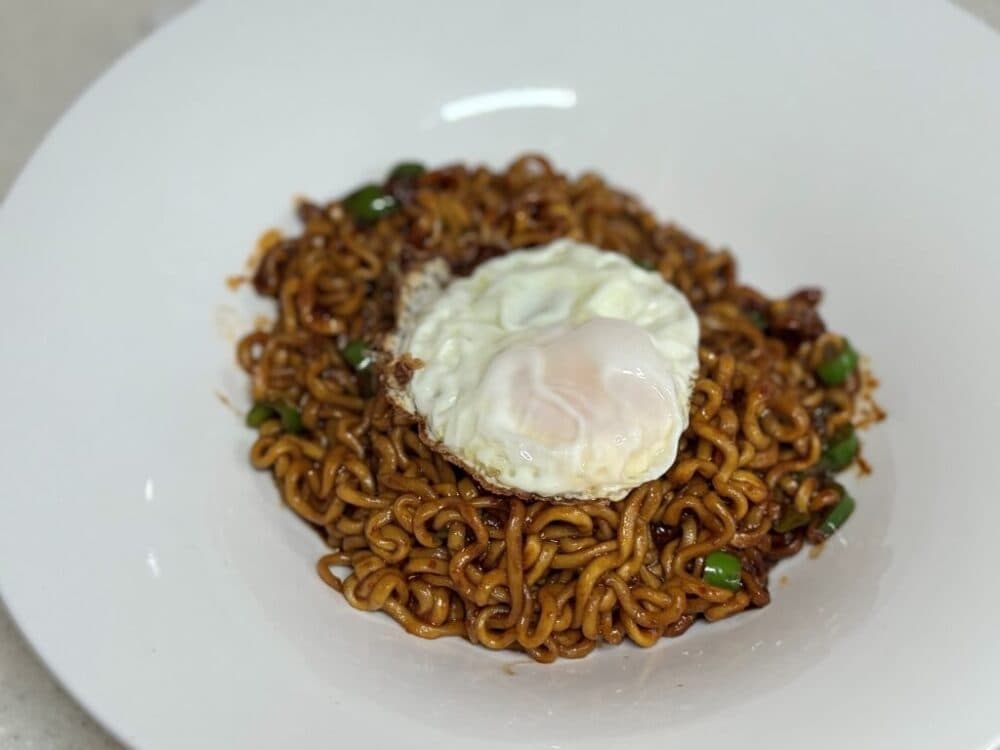
A fast jajang-style instant noodle bowl gets a hotter second life with hot green chili pepper, Korean red pepper flakes, and glossy chili oil.
Yoon Nam-no is a Korean chef who placed 4th on Netflix's Culinary Class Wars (흑백요리사). This is his Chapagetti upgrade.
From delivery bowl to shelf upgrade
The previous article was about jajangmyeon as a Korean comfort-food symbol: late-night delivery, shared tables, and the familiar drama scenes that made people outside Korea curious about it in the first place.
This follow-up moves from the restaurant delivery bowl to the shelf-stable version people can actually keep at home. If the culture piece was about why jajangmyeon matters, this one is about what you can do with a few packs of instant noodles and fresh hot chili peppers.
Why Chapagetti works as the base
Chapagetti is not the closest instant match to a restaurant jajangmyeon bowl. The sauce is drier, the flavor comes from seasoning packets, and it is not trying to replace a fresh sauce made with Korean black bean paste (chunjang).
But it is familiar, quick, and built around jajang-style seasoning packets. When the goal is a bolder, spicier bowl rather than a faithful restaurant copy, Chapagetti gives you the right starting point. Yoon Nam-no's upgrade leans into that: more heat, glossier sauce, richer finish.
What goes in
The source calls this a two-person recipe, but it uses 3 Chapagetti packs — expect closer to 3 servings.
№ I
Build the spicy base
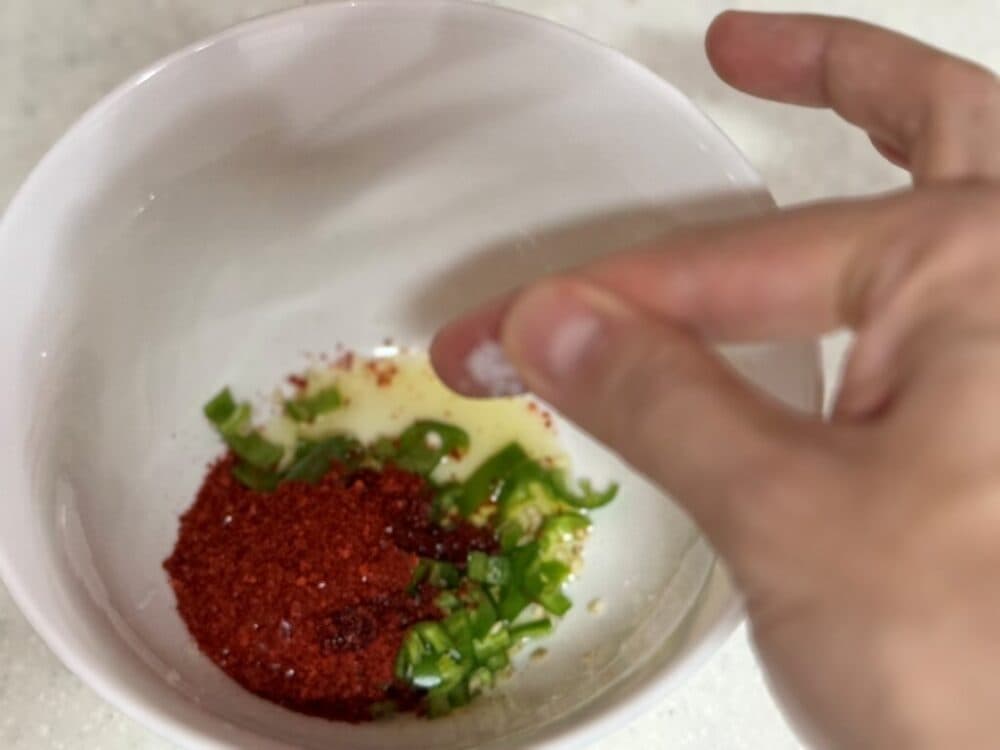
Open the three Chapagetti packs and separate the powdered seasoning packets from the dried flake packets — you will use them at different stages. Slice the cheongyang peppers (a hot Korean green chili pepper) thin if you can find them; outside Korea, use another small hot green chili pepper. In a bowl, combine the sliced peppers with Korean red pepper flakes, salt, one tablespoon of olive oil, and the dried flakes. This is the dry seasoning base that hot oil will turn into a chili-oil sauce.
№ II
Bloom it with hot oil
Heat six tablespoons of olive oil in a separate pan until it shimmers. Pour the hot oil directly over the seasoning bowl — the heat blooms the Korean red pepper flakes and sliced chili pepper on contact. Stir it all together until every piece is coated and the bowl looks like a glossy chili-oil base. Set it aside while you cook the noodles.

№ III
Boil, drain, and add powder first
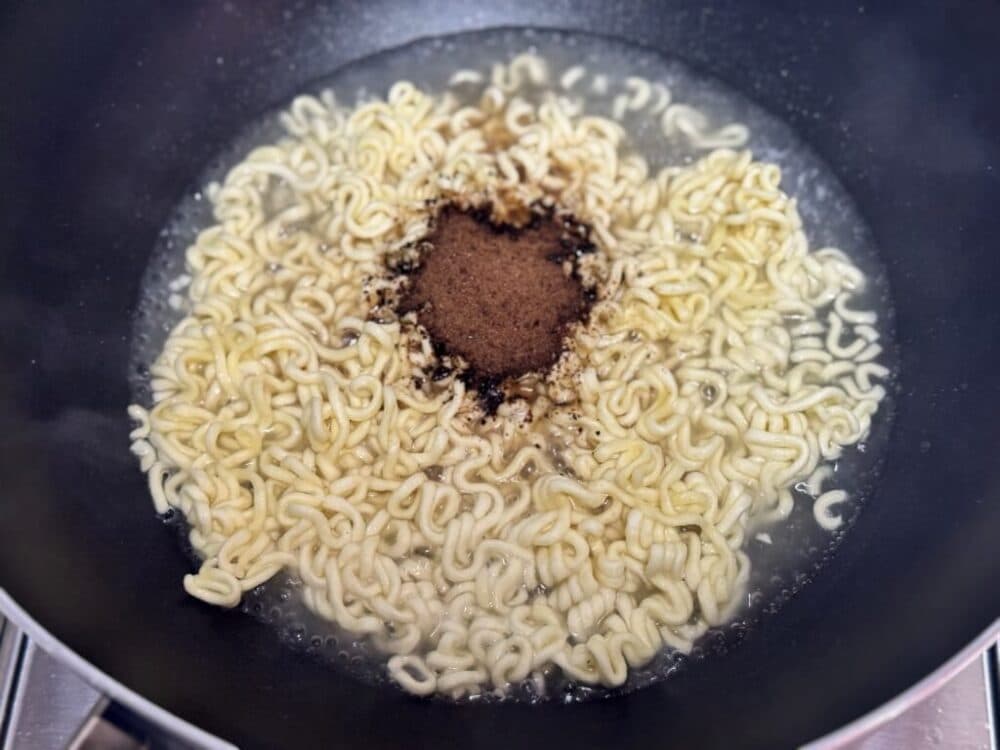
Boil the Chapagetti noodles for about three minutes, just enough so they stay firm. Scoop out a splash of the starchy noodle water and set it aside, then drain off most of the water. Add the powdered seasoning packets to the hot noodles first and toss briefly so the powder starts coating them before the chili-oil base goes in.
№ IV
Add the chili-oil base and toss
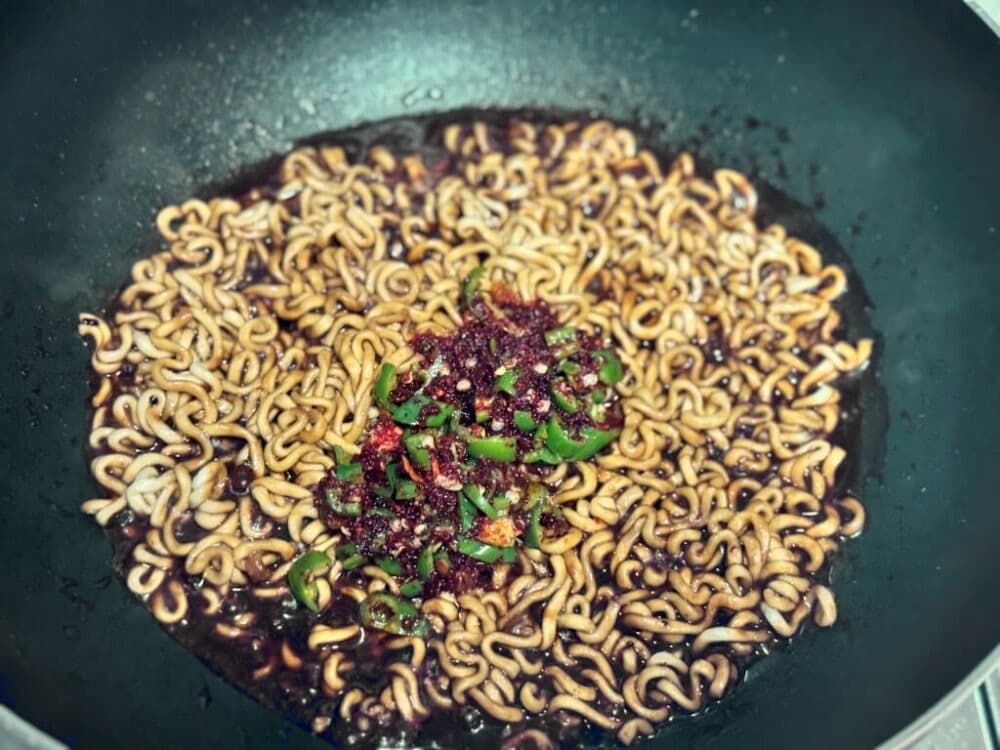
Once the powdered seasoning is coating the noodles, add the chili-oil base you made earlier and toss everything together fast — speed matters here because the sauce thickens as it cools. If the noodles start looking dry or clumping together, splash in a little of the reserved noodle water and keep tossing until the sauce coats every strand and the bowl looks glossy.
№ V
Finish it richer
Plate the noodles while they are still hot. The bowl is already bold on its own, but a fried egg on top is worth the extra minute — the runny yolk mixes into the chili-oil sauce, rounds out the heat, and makes the whole thing richer and easier to finish.
Why add an egg?
The spicy chili-oil base is sharp and hot. A fried egg rounds it out. The yolk adds richness, the white adds texture, and the whole bowl goes from intense to balanced. It is especially good when the batch stretches past one bowl, because the egg keeps the heat rounder as you eat through it.
Try it at home
Chapagetti and Korean red pepper flakes are shelf-stable Korean grocery items. KoreaBox can help you buy those pantry items from Korean stores and ship them overseas; use whatever fresh hot green chili pepper you can find locally.
Find Chapagetti in Korea →Quick answers
Is this restaurant jajangmyeon?
No. This is an instant-noodle upgrade, not a restaurant copy. Chapagetti gives you a jajang-style flavor base, and the chili oil pushes it in a spicier direction.
How spicy is it?
The source uses 5 cheongyang peppers and 4 tablespoons of Korean red pepper flakes, so it lands firmly spicy, especially if you use real cheongyang peppers. If cheongyang peppers are hard to find, use a small hot green chili pepper you can buy locally and adjust the amount to your heat tolerance.
Why keep noodle water?
The starchy water helps the powdered seasoning and chili-oil base coat the noodles evenly. Without it, the sauce can clump or dry out before you finish eating.